

Table of Contents
Risky Play Has Myriad Benefits
Risky Play – Introduction
Welcome, fellow adventurers! Today, we’re diving into a topic that’s close to our hearts and crucial for our little ones – risky play. If you’ve ever wondered how letting your kids take risks can benefit them, you’re in the right place. Join us as we explore the world of risky play and as we share the discoveries we’ve made by allowing Peri and Kai to engage in various risky play activities.

We believe, and research supports, that risky play contributes to kids being confident, resilient, and adventurous individuals – and on a daily basis we see these traits in our boys. From outdoor escapades to indoor challenges, we’ll uncover the myriad ways risky play can enhance a child’s growth and development. Ready to embark on this journey? Let’s get started!
As always, if you have comments/questions, please leave them below.
What Is Risky Play?

So, what exactly is risky play? Well, it’s all about letting children engage in activities that involve exposure to a controlled amount of danger and challenge. This could be anything from climbing trees, balancing on logs, trying out rock climbing, or swimming in the open water. Really any outdoor adventure will do, and even some indoor ones.
The idea is to let kids experience a little bit of risk in a controlled environment, where they can learn and grow from their experiences. It’s not about putting them in harm’s way but giving them the chance to push their boundaries and develop important life skills.
The Benefits Of Risky Play
Character Development

Risky play significantly contributes to a child’s character development. It teaches them resilience, confidence, and problem-solving skills. Studies have shown that children who engage in risky play are better at managing stress and more capable of taking on challenges independently. According to research published in the International Journal of Play, risky play helps children develop better emotional regulation and coping mechanisms. Peri and Kai have learned to trust their instincts, persevere through challenges, and celebrate their achievements, all thanks to engaging in risky play. Plus, they’ve developed a sense of adventure and a love for exploring new things.
Physical Health

Risky play is also fantastic for physical health. Activities that involve running, climbing, and jumping help kids develop their motor skills, strength, and coordination. The physical exertion associated with risky play can also improve cardiovascular health and overall fitness. The Canadian Pediatric Society recognizes that children who participate in active play, including risky play, are less likely to develop obesity and related health issues.
Social Skills

Engaging in risky play often requires kids to interact with others, fostering social skills such as cooperation, negotiation, and conflict resolution. When Peri and Kai play with other children, they learn to take turns, share resources, and support each other in overcoming challenges. These experiences are invaluable for their social development and future relationships.
Creativity And Innovation
Risky play encourages creativity and innovation. When kids are faced with challenges, they need to come up with creative solutions and think outside the box. Whether it’s figuring out how to climb a tricky tree or building a fort with limited materials, risky play stimulates their imagination and problem-solving abilities.
The Risks Of Being Overprotective
Undermining A Child’s Confidence

Being overly protective can undermine a child’s confidence and hinder their ability to handle challenges independently. According to Dr. Mariana Brussoni, an expert in child development at the University of British Columbia, overprotective parenting can prevent children from developing crucial life skills such as risk assessment and self-confidence. Allowing children to engage in risky play helps them develop self-reliance and a sense of accomplishment. It’s about giving them the tools they need to navigate the world confidently and competently.
Limiting Physical Development
When children are not allowed to engage in physically challenging activities, their physical development can be stunted. Overprotective parenting can lead to weaker muscles, poorer coordination, and lower overall physical fitness. Kids need opportunities to run, climb, and explore to develop their bodies fully.
Stifling Curiosity And Exploration

Children are naturally curious and eager to explore their surroundings. Overprotectiveness can stifle this curiosity, making children less likely to seek out new experiences and learn from them. This can limit their understanding of the world and their ability to navigate it independently.
Reducing Problem-Solving Skills
When kids are constantly shielded from challenges, they miss out on the chance to develop problem-solving skills. Risky play teaches children to assess situations, make decisions, and deal with the consequences of their actions. Without these experiences, they may struggle to handle problems effectively as they grow older.
Constant Recalibration

One of the key aspects of incorporating risky play into your child’s life is understanding that it is not a static process. The particular activities that are appropriate and beneficial will change as your child grows and develops. This constant recalibration ensures that the play remains developmentally appropriate and keeps them out of serious harm’s way.
Adapting To Growth And Skills

As children grow, their physical abilities, cognitive skills, and emotional maturity evolve. What might have been an exciting challenge for a toddler, like balancing on a low beam or climbing a small slide, will become less stimulating for a preschooler who is ready for bigger adventures. For instance, there was a time when Kai was thrilled by low climbing structures and gentle hikes, and during that same period Peri, being 18 months older, was engaged only when the climbing was more challenging and the trails were steeper and more technical.
Keeping It Age-Appropriate

To ensure risky play remains beneficial, parents need to constantly assess and adjust the level of risk involved in their children’s activities. This doesn’t mean eliminating risk but rather ensuring that the risks are manageable and appropriate for their age and skill level. For younger children, supervised knife use in the kitchen might start with cutting soft fruits with a butter knife. As they grow older and more dexterous, they can progress to using sharper knives under close supervision to help with more complex meal preparations.
Avoiding Serious Harm

While it’s important to let children experience and manage risk, it’s equally crucial to keep them out of serious harm’s way. This means creating a safe environment where the risks are calculated and manageable. For instance, when introducing Peri and Kai to rock climbing, we ensure they have proper gear, understand the safety protocols, and are supervised by experienced climbers. This way, they get to experience the thrill and challenge of climbing while minimizing the risk of serious injury.
Monitoring And Adjusting
Parents and caregivers should regularly monitor their child’s engagement with risky play and be ready to step in and adjust as needed. This might involve increasing the complexity of an activity as the child becomes more proficient or scaling back if the activity proves too challenging or dangerous. It’s a dynamic process, much like steering a ship where small adjustments keep you on the right course.
Encouraging Self-Assessment
As children grow, encouraging them to assess risks and make informed decisions is also vital. This self-assessment helps them become more aware of their capabilities and limits. When Peri decides to try a higher climbing route, we discuss the potential challenges and safety measures with him, fostering his ability to evaluate and manage risks independently.
Some Ways To Engage In Risky Play
While Ellen Beate Hansen Sandseter has identified the following 6 types of risky play, there are infinite ways in which risky play can manifest, limited only by imagination and environment. Sandseter’s categories are:
- Play with great heights
- Play with high speed
- Play with harmful tools
- Play near dangerous elements
- Rough‐and‐tumble play
- Play where the children can ‘disappear’/get lost
Below we’ve categorized them as either outdoor or indoor risky play activities and added a few that don’t distinctly fit into Sandseter’s model. Here are a few examples of how you can incorporate risky play into your child’s life:
Outdoor Risky Play
Playgrounds

Let’s start with the good old playground. Remember the thrill of climbing up to the highest point of the jungle gym or swinging as high as you could? Playgrounds are a fantastic place for kids to engage in risky play.
Peri loves challenging himself on the monkey bars, while Kai can spend hours climbing up the tallest slides. These experiences help them develop physical strength, coordination, and problem-solving skills. Plus, it’s a great way to burn off all that energy!
Hiking

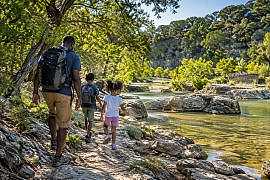
Hiking is another great way to introduce your kids to risky play. When we take Peri and Kai on hiking trails, they encounter all sorts of challenges like uneven terrain, steep inclines, scrambles over rocks, and the occasional wildlife encounter – a type of risky experience of its own!

These experiences not only build their physical endurance but also teach them about perseverance and the importance of taking calculated risks. Plus, it’s a fantastic way to connect with nature and spend quality family time together.
Rock Climbing

Rock climbing, whether on natural rock faces or at a climbing gym, is an exhilarating way for kids to engage in risky play. We’ve seen Peri and Kai develop incredible confidence and trust in their abilities while navigating climbing routes. Climbing teaches them about focus, patience, and the rewards of overcoming obstacles. And let’s be honest, seeing them conquer a climbing wall is pretty exhilarating as a parent!
Swimming

Swimming in natural bodies of water, like lakes or the ocean, offers kids the chance to engage in risky play in a different environment. With proper supervision, children can learn to navigate waves, currents, and the unpredictability of open water.

This type of play helps build their water safety skills and fosters a sense of adventure. Peri and Kai love the thrill of jumping into the waves and swimming in the open ocean.
Biking

Riding bikes on trails or through varied terrain is another excellent way for kids to experience risky play. Peri and Kai love the thrill of navigating downhill slopes and tackling challenging paths. If there is a pump track in the area, the boys are on cloud 9. Biking helps them develop balance, coordination, and the ability to assess and manage risks. Plus, it’s a great way to explore new places and enjoy the outdoors together.
Tree Climbing

Tree climbing is a classic form of risky play that kids love. It helps them develop strength, coordination, and problem-solving skills. Plus, it gives them a sense of achievement when they reach a higher branch. Peri loves finding the perfect tree to climb, and Kai often follows her lead, learning to navigate the branches and find his own way up.
Exploring Nature

Encouraging kids to explore nature, such as wading in creeks, building forts with sticks and leaves, or digging in the dirt, can provide valuable risky play experiences. These activities foster curiosity and creativity while helping kids develop a connection with the natural world.
Indoor Risky Play
Trampoline/Adventure Parks

Indoor trampoline parks provide a controlled environment for kids to engage in risky play. Jumping, flipping, and bouncing off walls offer them a fun and exhilarating way to push their physical boundaries. Peri and Kai always leave the trampoline park with big smiles and a sense of accomplishment. And let’s face it, watching them attempt those flips is both nerve-wracking and super entertaining!
Climbing Gyms

Indoor climbing gyms are perfect for rainy days when outdoor adventures aren’t an option. These gyms offer various climbing routes that challenge kids physically and mentally. Watching Peri and Kai conquer new heights indoors is just as rewarding as seeing them do it outdoors. Plus, it’s a great way to keep them active and engaged, even when the weather isn’t cooperating.
Wrestling
Engaging in playful wrestling at home or in a supervised environment helps children learn about physical boundaries, strength, and self-control. It’s a great way for Peri and Kai to burn off energy while learning important social skills like taking turns and respecting each other’s limits. Plus, it’s a fun way to bond and share some laughs together.
Cooking

Involving kids in cooking, especially with supervised knife use and stove handling, is another form of risky play. It teaches them practical life skills, enhances their fine motor skills, and instills a sense of responsibility. Both Peri and Kai love chopping vegetables and stirring pots.

Plus, it’s a fantastic way to bond as a family and create some delicious memories together. When we’re out in nature, their eagerness to help cook makes it easier for us to eat well when we’re camping.
Parkour
Indoor parkour gyms offer a controlled environment where kids can jump, run, and climb over various obstacles. It’s an excellent way for them to engage in risky play while developing agility, strength, and problem-solving skills.
DIY Projects

Engaging kids in DIY projects, like building models or simple machines, allows them to use tools and materials that require careful handling. Supervised use of hammers, saws, and drills can be thrilling for kids and teaches them valuable skills and safety awareness.
Martial Arts
Martial arts classes provide a structured environment for risky play. Kids learn discipline, self-defense, and physical coordination through activities that involve controlled risk. Peri and Kai have not yet tried martial arts, but it’s not hard to imagine that they’d enjoy learning the basic martial arts moves and that doing so would help them develop confidence and respect for their own and others’ physical boundaries.
Other Types Of Risky Play

While most risky play can be easily categorized as either indoor or outdoor activities, there are several types of risky play that don’t fit neatly into these categories. These activities often combine elements of both environments or involve scenarios that challenge children in unique ways. Here are a few examples:
Social Risk-Taking
Social risk-taking involves children engaging in interactions that push their social boundaries and help them develop essential interpersonal skills. This can include introducing themselves to new friends at a park, participating in group games where they may not know everyone, or expressing their opinions in a group setting. These activities help build social confidence, communication skills, and the ability to navigate social dynamics. Kai, for example, has no hesitation in introducing himself to new friends he meets at the playground, learning to negotiate, meeting new people, and managing group dynamics.
Emotional Risk-Taking

Emotional risk-taking involves encouraging children to express their feelings and thoughts openly, even when it feels challenging. This could be sharing their fears, admitting when they are wrong, or standing up for themselves or others. These experiences help children build emotional intelligence and resilience. Peri, for instance, has learned to articulate his frustrations and anxieties, which helps him manage his emotions more effectively, and Kai has become quite quick to admit when he makes a mistake.
Intellectual Risk-Taking
Intellectual risk-taking is about challenging children to think critically and creatively, often in ways that push them out of their comfort zones. This can include tackling complex puzzles, engaging in debates, playing strategic games, or experimenting with new ideas and solutions. Encouraging children to take intellectual risks fosters a growth mindset and a love for learning. Peri can’t get enough of chess. On a daily basis, we present Peri and Kai with challenging questions – often they are their own questions – and we do our best to help them answer them. Throughout our many outdoor family adventures, both boys must come up with creative solutions to problems, nurturing their curiosity and problem-solving skills.
Financial Risk-Taking
Introducing children to basic financial concepts and allowing them to make small financial decisions can be another form of risky play. This might involve giving them a small amount of money for completing some chores and letting them decide how to spend or save it, or engaging them in simple entrepreneurial activities like a lemonade stand. These experiences teach valuable lessons about money management, decision-making, and the consequences of financial choices. Peri has been eager to have an iced-milk tea stand on the beaches in Hong Kong, an experience that will certainly allow him to engage in learning the basics of earning and spending money.
Digital Risk-Taking
In today’s tech-savvy world, digital risk-taking is becoming increasingly relevant. This involves navigating the online world, understanding the risks of sharing personal information, and learning to use technology responsibly. Teaching children to safely explore the internet, participate in online learning activities, or even create their own digital content can help them become more digitally literate and responsible. While neither Peri nor Kai are yet old enough to be going online themselves, we have allowed them to dip their toes into creating digital art and playing a few educational games which has allowed us to crack into helping them to understand the importance of online safety.
Role-Playing And Imaginative Play

Role-playing and imaginative play often involve children taking on different personas and exploring various scenarios that can include elements of risk. Whether they are pretending to be superheroes, adventurers, or explorers, these activities allow children to experiment with different roles, make decisions, and face imaginary challenges. This type of play fosters creativity, empathy, and problem-solving skills. Peri and Kai love setting up elaborate pretend worlds where they face challenges and come up with creative solutions.
Creative Arts And Performance

Engaging in creative arts and performance activities, such as acting, singing, or dancing in front of an audience, can be a form of risky play. These activities push children out of their comfort zones, helping them build confidence and express themselves creatively. Participating in school plays, talent shows, or even family performances can provide a safe space for children to take these risks.
Incorporating these various types of risky play into your child’s life ensures they are well-rounded and prepared for a variety of challenges. By encouraging social, emotional, intellectual, financial, digital, and creative risks, we help our children grow into resilient, confident, and capable individuals.
Who Can Engage In Risky Play?
Everyone
Risky play isn’t just for older kids; even toddlers can benefit from age-appropriate risky play activities. From climbing over small obstacles to exploring new environments, every child can engage in risky play tailored to their developmental stage. The key is to ensure that the activities are suitable for their age and abilities.
Risky Play That’s Developmentally Appropriate

When it comes to risky play, it’s crucial to ensure that the activities are suitable for your child’s age and abilities. For younger children, activities might include climbing low structures or balancing on logs. Older children can handle more complex challenges such as hiking steeper trails or attempting higher climbs. Always assess your child’s readiness and comfort level before introducing new activities. It’s all about finding that zone of proximal development – that sweet spot where they are challenged but not overwhelmed.
How Much Risk Is Too Much Risk?

While risky play is beneficial, it’s important to strike a balance. Serious injuries are not acceptable, so always supervise your children and provide appropriate safety measures. Encourage them to push their boundaries but intervene when necessary to prevent accidents. It’s about letting them explore and learn, but in a safe and controlled way.
Risky Play – Conclusion
In conclusion, risky play is an essential aspect of childhood that fosters growth, resilience, and confidence. By allowing our children to engage in activities that challenge them, we equip them with the skills they need to navigate life’s uncertainties. So, next time you’re out on an adventure, encourage your little ones to take that leap, climb that rock, or dive into that wave. They’ll thank you for it later.
FAQs
- Q: Is risky play safe for young children?
A: Yes, as long as it is developmentally appropriate and supervised. Always ensure safety measures are in place. - Q: What if my child is afraid of risky play?
A: Start with small challenges and gradually increase the difficulty as they build confidence. Always offer encouragement and support. - Q: How do I know if an activity is too risky?
A: Assess the potential for serious injury and ensure appropriate safety measures are in place. If in doubt, supervise closely and be ready to step in if necessary.
Risky play can be a game-changer for your child’s development, offering a blend of fun, challenge, and growth. So, let’s embrace the adventures and watch our children soar! Happy exploring!
+++BEFORE using this information, please read our Legal Disclaimer+++